Overview
The Data Science and Technology (DST) Department - a part of the Computational Research Division (CRD) at Berkeley Lab - delivers leading-edge, innovative methods for solving data-intensive science problems. DST activities range from basic and applied research to deployment of software tools. Our projects span a diverse set of activities, including: data management; data movement; cybersecurity; machine learning, statistical, topological, and geometric analysis/analytics; computer vision; visualization; user-interface design; usability; end-to-end data-intensive system architecture and deployment. We focus on conceiving, developing, and applying leading-edge, innovative methods for solving data-intensive science problems. Our multidisciplinary teams are engaged on projects in five primary mission areas:- Scientific workflows and data analysis algorithms and frameworks
- Data synthesis, management, movement, and curation of large and complex datasets
- User-centered design of interfaces and software
- High-performance machine learning, data analytics, and visualization capabilities
- Cybersecurity for science and energy
Latest News
Latest news on DST and other CRD and LBL projects are available at Computational Research Division New Page and Berkeley Lab News CenterMay 20, 2019
National Academies Taps Cholia for Scientific Workflows Committee
DST group lead, Shreyas Cholia, has been invited by the National Academies of Sciences, Engineering, and Medicine to serve as a member for the Realizing Opportunities for Advanced and Automated Workflows in Scientific Research committee. The expert committee will conduct a study examining current efforts to develop advanced and automated workflows for scientific research to identify promising research approaches to accelerate progress in the utilization of workflow systems and tools.
Read more in LBNL CS News.
December 4, 2018
Berkeley Lab Cybersecurity Specialist Highlights Data Sharing Benefits, Challenges at NAS Meeting
DST member Sean Peisert presented at a meeting of the National Academies' Committee on Science, Engineering, Medicine, and Public Policy (COSEMPUP) about strategic use and combination of computer security and privacy-preserving techniques to overcome certain data-sharing barriers, and ways in which such techniques serve as a means to facilitate, enhance, and create incentives for increased data sharing in the sciences - thereby accelerating data-driven scientific discovery.
Read more in LBNL CS News.
November 20, 2018
Berkeley Lab Researchers to Build Standards for Neurophysiology Data
$2 Million NIH Grant to Fund Neurodata Without Borders Project
DST member Oliver Reubel along with a large team of other researchers will receive $2 million from the National Institutes of Health (NIH) to develop a next-generation data format and software ecosystem for the Neurodata Without Borders: Neurophysiology (NWB:N) project.
NWB:N is a consortium of researchers and foundations that are interested in breaking down obstacles to data use and sharing in neuroscience. The group ultimately aims to standardize neurophysiology data on an international scale to ensure the success of brain research worldwide and accelerate the pace of scientific discovery.
Read more in LBNL CS News.
November 7, 2018
SENSEI Showcased at SC18
CRD scientists at SC18 are showcasing SENSEI, a lightweight software infrastructure that enables simulations to make use of a wide array of popular in situ analysis and visualization packages. In situ, or “in place” data analysis and visualization will be critical to the success of exascale simulations. SENSEI decouples simulation codes from the specifics of any particular analysis or visualization package. Codes calling on SENSEI’s interface can switch out or combine the capabilities of multiple in situ packages.
at SC18, CRD staff working on SENSEI, including Burlen Loring, Wes Bethel and Gunther Weber, will present a paper describing recenlty added support for the popular Python programming language.
Read more in CRD News at Berkeley Lab.
September 24, 2018
At Biden Summit, CRD's Ushizima Discusses Using Machine Learning to Improve Cancer Detection
Dani Ushizima, a staff scientist in Lawrence Berkeley National Laboratory’s Computational Research Division (CRD) who has adapted algorithms used in materials research to scan for cervical cancer, described her research in a panel discussion at the Sept. 21 East Bay Biden Cancer Community Summit. A common thread in each speaker's presentation was the importance of federally funded research in developing new methods to prevent and treat cancer.
The meeting was sponsored by East Bay Congressman Mark DeSaulnier, himself a cancer survivor, in conjunction with a Cancer Community Summit hosted by former Vice President Joe Biden in Washington, D.C., through his Biden Cancer Initiative.
Read more in CRD News at Berkeley Lab.
July 3, 2018
DST Staff Play Integral Role in ISC18
DST member Sean Peisert presented his work on "Cyber Security Challenges and Opportunities in High Performance Computing Environments" at the 2018 International Supercomputing Conference (ISC-18) in Frankfurt, Germany, on June 26, 2018
First held in 1986, ISC High Performance is the oldest conference and networking event for the high performance computing (HPC) community. It offers a five-day technical program focusing on HPC technological development and its application in scientific fields and commercial environments.
Read more in Today at Berkeley Lab and LBNL CS News.
June 2018
Berkeley Lab Researchers Use Machine Learning to Search Science Data
Data Science and Technology Department (DST) personnel along with National Energy Research Scientific Computing Center (NERSC) personnel have been developing new ways of developing metadata for science data. As scientific datasets increase in both size and complexity, the ability to label, filter and search this deluge of information has become a laborious, time-consuming and sometimes impossible task, without the help of automated tools.
Today, search engines are ubiquitously used to find information on the Internet but searching science data presents a different set of challenges. For example, Google’s algorithm relies on more than 200 clues to achieve an effective search. “The lack of real metadata labels eventually causes problems when the scientist tries to find the data later or attempts to share it with others,” says Lavanya Ramakrishnan, a staff scientist in Berkeley Lab’s Computational Research Division (CRD) and co-principal investigator of the Science Search project. “But with machine-learning techniques, we can have computers help with what is laborious for the users, including adding tags to the data. Then we can use those tags to effectively search the data.”
April 27, 2018
Berkeley Lab Hosts Neurodata Without Borders Hackathon
DST's Oliver Ruebel along with Andrew Tritt and Kristofer Bouchard organized the fifth Neurodata Without Borders: Neurophysiology (NWB:N) project hackathon. Thirty-one neuroscience experts from across the country came to Lawrence Berkeley National Laboratory (Berkeley Lab) on April 26 and 27 to participate in the hackathon. The event was organized in close collaboration with UC San Francisco’s Loren Frank and Eddie Chang and the broader Neurodata Without Borders (NWB:N) community.
“Some of the goals of this event were to promote the adoption of NWB:N software, train new users, work with users to integrate examples of their lab’s data into NWB:N, as well as facilitate communication between users, developers and project teams,” says Ruebel, a research scientist in CRD’s Data Analytics and Visualization Group. “The Berkeley Lab hosted hackathon is a reflection of our leadership in both the development and dissemination of the NWB:N.”
April 2018
ACM Honors Project Jupyter Team for Developing Open Source Tools for Interactive Computing
The Project Jupyter team has been honored with an Association of Computing Machinery (ACM) Software System Award for developing a tool that has had a lasting influence on computing. Project Jupyter evolved from IPython, an effort pioneered by Fernando Pérez, an assistant professor of statistics at UC Berkeley and staff scientist in the Usable Software Systems Group in Lawrence Berkeley National Laboratory’s (Berkeley Lab’s) Computational Research Division.
The award and a prize of $35,000 will be presented to the team at the ACM Awards banquet in San Francisco on June 23, 2018. Read more
April 16, 2018
Researchers Develop Platform for Hosting Science Data Analytics Competitions
The Department of Energy’s National Nuclear Security Agency (NNSA) is searching for innovative algorithms to detect non-natural radiation sources in urban environments, which has important implications for national security and environmental remediation. So NNSA is taking a cue from academia, as well as companies like Netflix and Google, and hosting a data analytics competition. NNSA turned to researchers and engineers in the Lawrence Berkeley National Laboratory’s (Berkeley Lab’s) Computational Research (CRD), Nuclear Science (NSD) and Information Technology (IT) divisions to help build a Kaggle-inspired platform.
“We are creating a data competition portal. Because of the unique requirements of our stakeholders, we built a system inspired by Kaggle, but tailored to the needs of DOE research” says Shreyas Cholia, who leads CRD’s Usable Software Systems Group. “You can think of it as crowd-sourced machine learning and analytics, where users download test and training datasets, and apply their own techniques to predict a set of results. Results are then uploaded to the competition portal and scored against the canonical ground truth data.”
Cholia notes that the Berkeley Lab-developed platform includes a user-friendly web portal where competition hosts can upload datasets and setup a competition. In fact, the system can host several competitions at once. Competitors can download that dataset, perform their analysis and upload their results. The system will then score the techniques and update a public scoreboard so that the competitors can see where they stand. Each user can submit a number of techniques during the competition to try to improve their score.
Development of the portal included key contributions from Hamdy Elgammal (CRD), Yeongshnn Ong (CRD), Kai Song (IT), Krishna Muriki (IT) and Val Hendrix (CRD), who worked with NSD staff to build a robust and reusable platform.
March 27, 2018
Cyber Defense Tool Is an Early Warning System for Grid Attacks
A new tool will enable grid operators to better detect not only a brutal physical attack, but also a hacker probing for vulnerabilities
"The thousands of substations that are nodes in North America's electrical grid receive high-voltage energy from transmission lines that originate at power plants and step down that voltage so it can enter local distribution networks to power homes and businesses. Although distributed in nature, grid operators worry that the loss of just a few critical substations could trigger an outage that cascades across a region, potentially crippling a major urban center."
"Against those background events, a team of researchers working at the U.S. Energy Department's Lawrence Berkeley National Laboratory completed work earlier this year on a project to design and implement a tool they say can detect cyberattacks and physical assaults on power distribution networks."
March 23, 2018
Into the Medical Science DMZ
"The 1996 Health Insurance Portability and Accountability Act (HIPAA) is best known for preserving insurance coverage for employees who change or lose their jobs. But the law also includes a Security Rule and a Privacy Rule that protect confidential healthcare data for consumers.
"... Lawrence Berkeley National Laboratory (LBNL) computer scientist Sean Peisert and Energy Sciences Network (ESnet) researcher Eli Dart and their collaborators outline a 'design pattern' for deploying specialized research networks and ancillary computing equipment for HIPAA-protected biomedical data that provides high-throughput network data transfers and high-security protections."
March 15, 2018
Lab Researchers Awarded Funds for Climate Science, Cybersecurity Research
The UC National Laboratory Fees Program targets funding toward strategic areas of research to address key challenges faced by both the state of California and the nation. For 2018, the program invested more than $25 million to seven research teams focused on climate science, cybersecurity, and national security through the social sciences.
Berkeley Lab is a co-recipient of four awards, including one for a cybersecurity project in Berkeley Lab's Data Science and Technology Department — from the University of California National Laboratory Fees Research Program — called, "UC-Lab Center for Electricity Distribution Cybersecurity," which is a partnership between UC Riverside, UC Irvine, UCLA, UC Santa Barbara, Lawrence Livermore, and the Berkeley Lab.
March 7, 2018
Combination of Old and New Yields Novel Power Grid Cybersecurity Tool
An innovative R&D project led by Berkeley Lab researchers that combines cybersecurity, machine learning algorithms and commercially available power system sensor technology to better protect the electric power grid has sparked interest from U.S. utilities, power companies and government officials.
Launched in 2015, the three-year project is now moving into the tech transfer stage, according to project lead Sean Peisert, a computer scientist in Berkeley Lab’s Computational Research Division and a cybersecurity expert. In addition to receiving funding support from the Department of Energy’s Cybersecurity for Energy Delivery Systems (CEDS) program in the Office of Electricity Delivery and Energy Reliability, the team has been working closely with key industry partners, including EnerNex, EPRI, Riverside Public Utilities and Southern Company.
February 5, 2018
Researchers Discuss Challenges of Storing and Retrieving Exascale Data
The DST Scientific Data Management group has been working with NERSC personnel on advancements in HDF5. In particular, many of these advancements are designed to enable scientific data management in the exascale era. In this podcast, Suren Byna and Quincey Koziol discuss prepping HDF5 – one of the most parallel I/O libraries for high-end supercomputing systems – for exascale use.
January 30, 2018
Berkeley Lab Researchers Contribute to Making Blockchains Even More Robust - Hyperledger Iroha project notes that this work heavily inspired their protocol
Blockchain—a technology used for verifying and recording digital transactions—blasted into public consciousness with the rise of Bitcoin. But this tool could also transform the way governments, global industries and even science research operate. In fact, several banks, corporations, governments and scientists have already implemented some form of blockchain to inexpensively, securely and expediently store and share information.
In the last few years, researchers at Lawrence Berkeley National Laboratory (Berkeley Lab), University of California at Davis (UC Davis) and University of Stavanger in Norway have developed a new protocol, called BChain, which makes blockchain even more robust. A paper describing BChain was published in the Proceedings of the 18th International Conference on Principles of Distributed Systems. The researchers are also working with colleagues at Berkeley Lab and beyond to adapt this tool to support applications that are of strategic importance to the Department of Energy’s (DOE) Office of Science.
April 28, 2018
DST's Peisert named Chair of the IEEE Technical Committee on Security and Privacy
DST's Sean Peisert assumed the role as Chair of the IEEE Technical Committee on Security and Privacy (TCSP), on January 1, 2018. The TCSP has more than 2,000 members worldwide and oversees the IEEE Symposium on Security and Privacy, the flagship academic computer security conference with over 600 attendees annually; the IEEE European Symposium on Security and Privacy, the IEEE Computer Security Foundations Symposium, and the IEEE Secure Development Conference. Dr. Peisert's term as chair runs January 1, 2018–December 31, 2019, and follows a two-year term as vice chair and chair-elect. Previously, he was general chair of the 36th IEEE Symposium on Security and Privacy, in May 2015.
December 18, 2017
Improved Neurodata Sharing Software Released
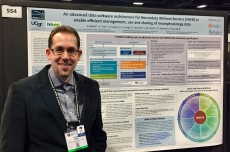
Neurodata Without Borders is a consortium of researchers and foundations with a shared interest in breaking down obstacles to data use and sharing. The group ultimately aims to standardize neurophysiology data on an international scale to ensure the success of brain research worldwide and accelerate the pace of discovery. It was initiated by the Kavli Institute in mid-2014 in the wake of the Brain Initiative announcement.
The 2.0 software version was developed by Oliver Ruebel (Data Science and Technology Department) and Andrew Tritt(Computer Science Department), in close collaboration with Kristofer Bouchard, also of Berkeley Lab, Loren Frank and Eddie Chang (UCSF), and the broader Neurodata Without Borders (NWB) community. The beta update was announced earlier this year and the team presented a poster of their work at the 2017 Society for Neuroscience meeting in Washington D.C. last month.
December 4, 2017
DST Projects Improve Scientific Workflow Capabilities on HPC Systems
A common staple of scientific work on HPC systems is a workflow (series of steps and programs). These workflows can be complex and achieving efficiency is often ellusive. Lavanya Ramakrishnan and Gonzalo Rodrigo of the Data Science and Technology Department have released new software that allows HPC scheduling systems to automatically address these issues. The software is the result of a two-year collaboration between staff in the lab’s Data Science and Technology Department. and the Distributed Systems Group at Umeå University in Sweden.
November 27, 2017
Ushizima recognized for outreach with lab director's award
Diversity and Outreach have been a passion for Dani Ushizima of the DST Department. She has been involved in a broad range of activities including Black Girls Code, Tech Women, Grace Hopper Conference, and many more. She was recognized with the Directors Outreach award “For her selfless and tireless efforts as an exemplary ambassador of science and goodwill, engaging new and emerging scientists around the globe, and sharing knowledge that improves others’ lives.”
October 16, 2017
ESnet’s Science DMZ Design Could Help Transfer, Protect Medical Research Data
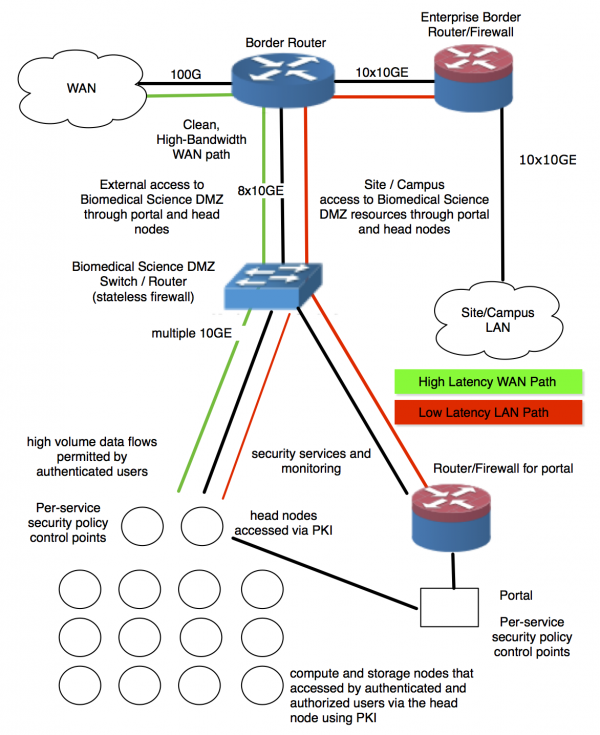
Like other sciences, medical research is generating increasingly large datasets as doctors track health trends, the spread of diseases, genetic causes of illness and the like. Effectively using this data for efforts ranging from stopping the spread of deadly viruses to creating precision medicine treatments for individuals will be greatly accelerated by the secure sharing of the data, while also protecting individual privacy.
In a paper published Friday, Oct. 6 by the Journal of the American Medical Informatics Association, a group of researchers led by Sean Peisert of the Department of Energy’s (DOE) Lawrence Berkeley National Laboratory (Berkeley Lab) wrote that the Science DMZ architecture developed for moving large data sets quick and securely could be adapted to meet the needs of the medical research community.
September 30, 2017
DOE 40th Anniversary Milestone: Berkeley Lab's FastBit
As part of its 40th anniversary celebration DOE highlighted DST's FastBit technology developed in the Scientific Data Management group. The 40 Years of Research Milestones included FastBit and cited John Wu's paper from 2005.
September 26, 2017
Berkeley Lab Aims to Strengthen the Cybersecurity of the Grid
As part of the Department of Energy's (DOE's) commitment to building cyber-resilient energy delivery systems, a new project led by Lawrence Berkeley National Laboratory (Berkeley Lab) will develop tools to detect and counter certain types of cyber attacks on the grid. The project has been awarded up to $2.5 million in funding over three years by DOE, one of 20 projects for cybersecurity on the grid announced recently.
August 24, 2017
DST's Peisert Discusses Challenges and Opportunities of Securing HPC
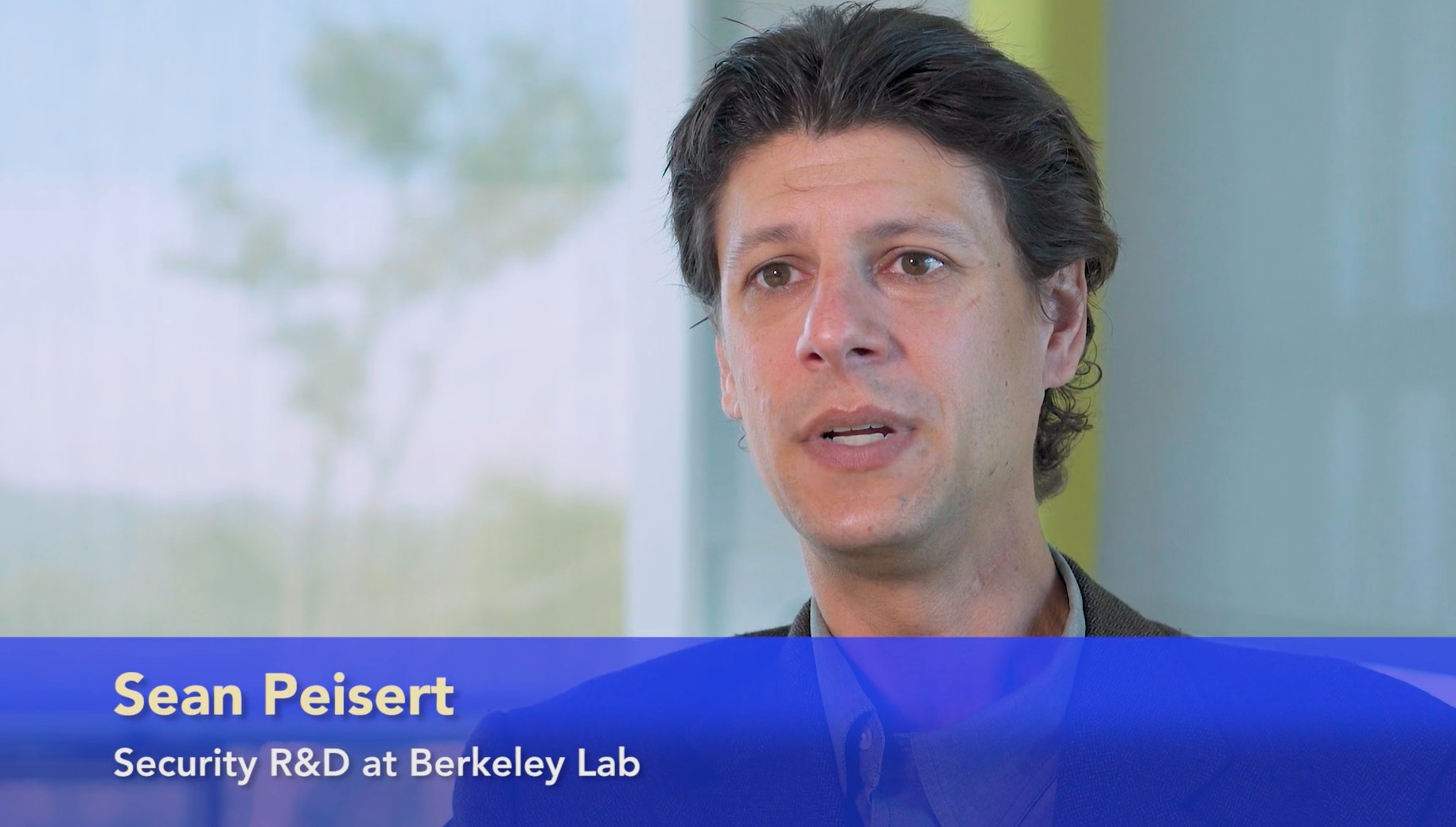
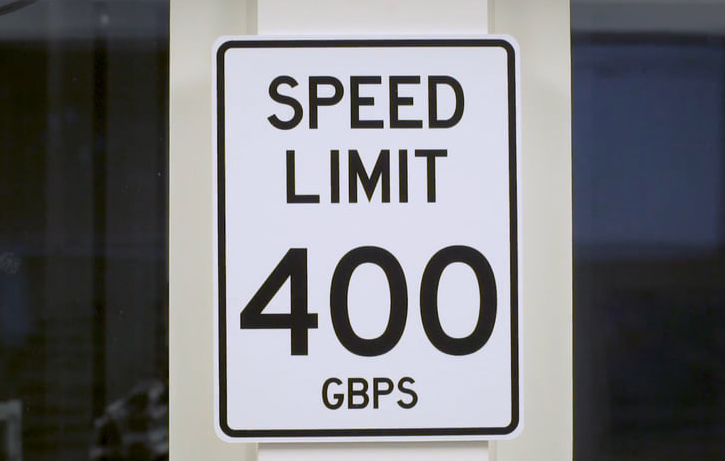
How is computer security different in a high-performance computing (HPC) context from a typical IT context? ... This article focuses on four key themes surrounding this issue.
July 3, 2017
DST has Three Papers on First Day at ACM HPDC 2017
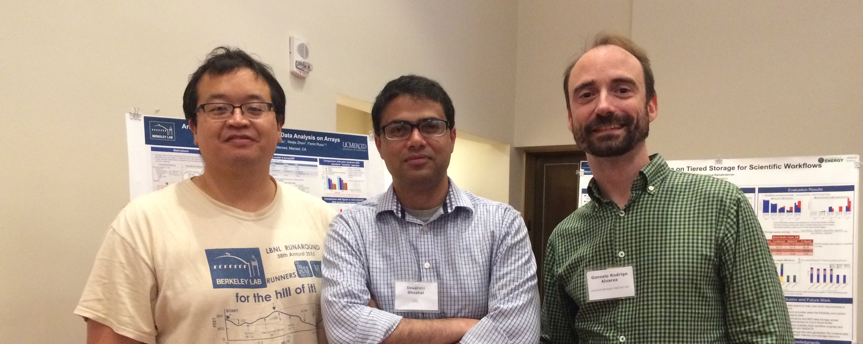
Three DST members Bin Dong, Devarshi Goshal, and Gonzalo Rodrigo presented their work on scientific data processing, workflow management and scheduling at the ACM International Symposium on High-Performance Parallel and Distributed Computing (HPDC) in Washington D.C.. on June 28 2017.
The ACM HPDC is the premier annual conference for presenting the latest research on the design, implementation, evaluation, and the use of parallel and distributed systems for high-end computing. This was a competitive year, with a paper acceptance rate of 19%.
Follow the links to download the papers:
Dong, B., Wu, K., Byna, S., Liu, J., Zhao, W. and Rusu, F., 2017. ArrayUDF: User-Defined Scientific Data Analysis on Arrays.
Ghoshal, D. and Ramakrishnan, L., 2017, June. MaDaTS: Managing Data on Tiered Storage for Scientific Workflows.
Rodrigo, G.P., Elmroth, E., Östberg, P.O. and Ramakrishnan, L., 2017, June. Enabling Workflow-Aware Scheduling on HPC Systems.
June 26, 2017
DST’s Weber Co-Authors EuroVis 2017 Best Paper
Gunther Weber of the Data Science and Technology Department (DST) was among the authors of “Nested Tracking Graphs,” which won the Best Paper award at EuroVis 2017. EuroVis is an annual international visualization symposium which was held June 12 - 16 in Barcelona, Spain this year.
Read the paper: Nested Tracking Graphs EuroVis 2017 Paper
May 9, 2017
FLUXNET2015 Dataset Highlighted in EOS
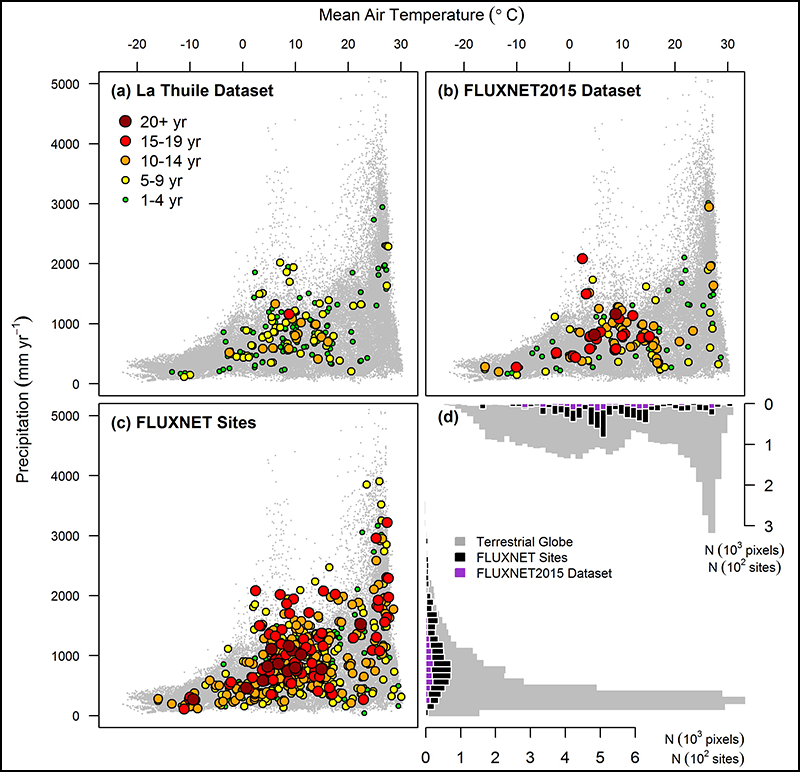
FLUXNET2015 — a new data set to keep a sharper eye on land-air exchanges. The latest update of the longest global record of ecosystem carbon, water, and energy fluxes, features improved data quality, new data products, and more open data sharing policies. DST's own Gilberto Pastorello was the lead author on the article.
Follow the link to read the rest: EOS FLUXNET2015 Article
May 3, 2017
Supercharging the computers that will save the world
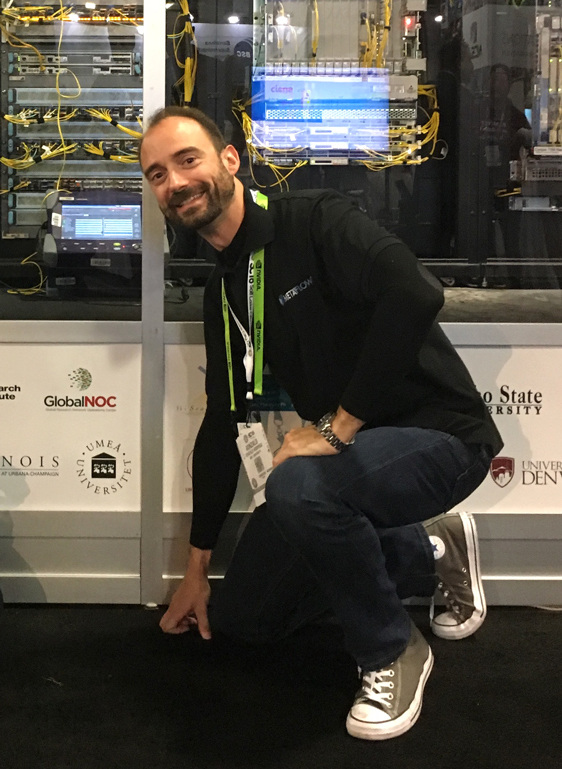
Data Science and Technology postdoc Gonzalo Rodrigo while at Umeå University in Sweden developed new techniques and tools to manage high performance computing systems more efficiently. This in an effort to comply with the increasing demand to handle large amounts of data within research and allowing for advance simulations.
Follow the link to read the rest: https://phys.org/news/2017-05-supercharging-world.html
April 3, 2017
Lab Scientists Visit Kenya With International TechWomen Delegation
In February Lab scientists Daniela Ushizima, of the DST Department, and Teresa Williams took their first trip to Africa as part of a delegation organized by TechWomen, a unique mentoring and exchange program funded by the U.S. Department of State and administered by the Institute of International Education. The trip was eye opening and hugely inspirational for the women, both personally and professionally.
Follow the link to read the rest: TaBL Article
February 11, 2017
Mind the gap: Speaking like a cybersecurity pro

"The Open Science Cyber Risk Profile is a bridge between the language of the domain scientist and the language of the information security professional."
Follow the link to read the rest: ScienceNode news story
November 7, 2016
FLUXNET2015 Dataset: New and Last Update Released
The Fluxdata Team (including Gilberto Pastorello, You-Wei Cheah, Megha Sandesh, and Deb Agarwal from DST) has released the final update of the FLUXNET2015 dataset. To learn more about the dataset, visit https://fluxnet.fluxdata.org/.
Follow the link to read the rest: FLUXNET2015 news story
September 16, 2016
The Value of Failed Experiments
"The 'Learning from Authoritative Security Experiment Results (LASER)' workshop series was established in 2012 with the purpose of publishing results for 'properly conducted experimental (cyber) security research, including both successful as well as unsuccessful experiments.' [This article] discusses the importance of failed experiments and evidence-based approaches in cybersecurity.'"
Follow the link to read the rest: IEEE Cybersecurity Initiative news story
October 31, 2016
Working Group on Open Science Cybersecurity Risks Releases First Document Draft for Public Comment
Over the past several months, ESnet and the NSF Cybersecurity Center of Excellence collaborated with research and education community leaders to develop a risk profile for open science to formally capture and benchmark this expertise, allowing other organizations to apply these best practices more broadly.
Today, the group is releasing its draft Open Science Cyber Risk Profile (OSCRP) and inviting comment from the research community. The OSCRP is designed to help principal investigators and their supporting information technology professionals assess cybersecurity risks related to open science projects.
Follow the link to read the rest: ESnet news story
July 12, 2016
DST's Sean Peisert to lead project developing new data analysis methods for power grid
The project jointly led by LBNL and LLNL, Threat Detection and Response with Data Analytics, is part of a $220 million, three-year Grid Modernization Initiative launched in January 2016 by the Department of Energy to support research and development in power grid modernization. The goal of this project is to develop technologies and methodologies to protect the grid from advanced cyber and threats through the collection of data from a range of sources and then use advanced analytics to identify threats and how best to respond to them. Specifically, the project team hopes to be able to distinguish between power grid failures caused by cyber attacks and failures caused by other means, including natural disasters, normal equipment failures and even physical attacks.
Follow the link to read the rest: CRD news story
June 9, 2016
DST's Deb Agarwal profiled in honor of Lesbian, Gay, Bisexual, and Transgender Pride Month in June
When Deb Agarwal [the head of the DST department] first joined Berkeley Lab 22 years ago, she loved seeing the rainbow flag fly every June. But a number of years back, she noticed that it hadn't flown for a couple of years. No one seemed to think it was a big deal, but Agarwal felt otherwise, so she took it upon herself to make sure it was up every June....
Follow the link to read the rest: Profile
May 19, 2016
DST's Oliver Ruebel developer on Berkeley Lab's OpenMSI, which has been licensed to ImaBiotech
Two years ago, Lawrence Berkeley National Laboratory researchers developed OpenMSI - the most advanced computational tool for analyzing and visualizing mass spectrometry imaging (MSI) data. Last year, this web-available tool was selected as one of the 100 most technologically significant new products of the year by R&D Magazine. Now, OpenMSI has been licensed to support ImaBiotech's Multimaging technology in the field of pharmaceutical and cosmetic research and development. The Multimaging platform essentially allows researchers to combine and overlay different image files that have been acquired from different imaging techniques - like qualitative MALDI imaging, staining and immune staining—to increase confidence in data sets.
With cutting-edge MSI technology, scientists can study tissues, cell cultures and bacterial colonies in unprecedented detail at the molecular level. This information can lead to the discovery of new drug targets, diagnostic tests and more effective drugs. Beyond healthcare, MSI can be applied to industrial biotechnology, plant agriculture, veterinary medicine, forensic investigation, environmental toxicology, combatting terrorism, even exploring the universe. However as MSI datasets have grown from gigabytes to terabytes, basic tasks like opening a file or plotting spectra and ion images became insurmountable challenges for the average scientist.
To help researchers overcome these challenges, two Berkeley Lab researchers - Oliver Ruebel of the Computational Research Division (CRD) and Ben Bowen of the Environmental Genomics and Systems Biology (EGSB) Division with support from the National Energy Research Scientific Computing Center (NERSC), conceptualized and developed OpenMSI. This work was part of a larger effort at Berkeley Lab to extend advanced computational techniques to science areas (and scientists) that haven’t benefited from them in the past. The tool, which makes highly optimized computing technologies available to researchers via a user-friendly interface, was born from the Lab's Integrated Bio-imaging Initiative, and initially developed with funds from NERSC and the Laboratory Directed Research and Development (LDRD) Program at Berkeley Lab. NERSC is a DOE Office of Science User Facility.
Because OpenMSI leverages NERSC's resources to process, analyze, store, and serve massive MSI datasets, users can work on their data at full-resolution and in real-time without any special hardware or software. They can also access their data on any device with an Internet connection.
"OpenMSI has really been a grassroots effort. We always believed that OpenMSI would be a transformational technology, so we worked with Berkeley Lab's Innovation and Partnerships Office early on to protect the Lab's intellectual property," says Ruebel.
"This licensing agreement is certainly a great achievement towards achieving our vision of transforming mass spectrometry imaging research and applications through computing, but we still have a ways to go to fulfill our vision and to fully develop OpenMSI and achieve broad adoption," adds Bowen.
ImaBiotech is a contract research organization that offers services in mass spectrometry imaging. Headquartered in Lille, France, the company also develops and implements new imaging technologies.
March 18, 2016
Open Positions in DST
DST has a a number of open positions right now - Scientific Data Management Postdoctoral Researcher
The Scientific Data Management Research Group has an immediate opening for a post-doctoral researcher to analyze storage systems and parallel I/O performance and to develop novel object-based storage technologies for upcoming exascale era. Apply here
Usable Software Systems Group - User Research Postdoctoral ResearcherThe Usable Software Systems Groups is looking for a postdoc in user research with experience in ethnography, user studies, user analytics. Apply here
Computer Security and Systems Data Analysis Postdoctoral ResearcherLooking for a post-doctoral researcher to perform data engineering and analysis of security and systems-behavior data, including use of machine learning and/or graph-theoretic approaches, in multiple domains. The position will analyze systems behavior in scientific computing environments, as well as security-related issues in cyber-physical system environments. Apply here
Data Analysis and Visualization Open PositionsOpenings for a research scientist, a CSE and a postdoc with expertise on scientific imaging, computer vision and machine learning algorithm development to perform pattern recognition applied to problems in material sciences, such as characterization of new composites and films for microelectronics.
January 19, 2016
Dani Ushizima Participated in Black Girls CODE Robot Expo
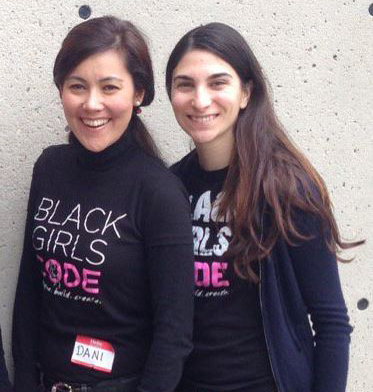
Last month, Dani Ushizima from the DST department (left) and Laleh Cote (Workforce Development & Education) joined forces with Black Girls CODE to support 214 girls of color (ages 7-17) at the Robot Expo. The girls participated in hands-on activities on robotics, heard from from STEM professionals, and learned about applications and uses for robots.
January 19, 2016
ESnet, CENIC Announce Joint Cybersecurity Initiative; DST's Sean Peisert to Direct
ESnet and the Corporation for Education Network Initiatives in California (CENIC) recently announced a partnership in developing cybersecurity strategy and research. CENIC is a nonprofit organization that operates the California Research & Education Network (CalREN), a high-capacity network with over 20 million users. Sean Peisert of the Computational Research Division will be director of the new CENIC/ESnet Joint Cybersecurity Initiative. Peisert, who was also recently named as the chief cybersecurity strategist for CENIC, has worked extensively in computer security research and development. He will continue his work at Berkeley Lab and as an adjunct faculty member of the University of California at Davis.